The Etymological Court #13: Socialism
Cooperative production for use, not 'when the government does stuff.'
The word meant cooperative production for use. Then the tax man borrowed it.
The Word
socius. Latin for companion. Before socialism was a program, it was a claim about human nature: that we are companions first, competitors second; that association is not a contract you enter but a condition you are born into. The word reached for a politics of solidarity, and the reach was real even when the doctrine stumbled.
The word socialist first appears in the English Co-operative Magazine in 1827, written by the followers of Robert Owen. In 1833 Pierre Leroux used it in print, in France, to name the school of Saint-Simon, Fourier, and Owen: the people who believed the new industrial world could be organized around cooperation instead of competition. The first school was not a party. It was a set of workshops, phalanstères, and model communities; people who tried to build the answer before arguing about the name. By the time the theorists had finished their pamphlets the workers had already moved in.
The name, before the theft, meant one thing: the means of production should belong to the people who work them, and production should serve use, not exchange.
What It Wanted
Few ideas have stirred as much hope, and as much debate, as socialism. Strip away a century of slogans and misrepresentation, and what remains is a simple, generous proposition: an economy should serve everyone, not just those lucky enough to own it. Socialism is the philosophy that prosperity works best when it is shared, that a society is judged by how it treats its most vulnerable members, and that ordinary people are capable of governing their own economic lives. Read it at its strongest, and the proposition is unanswerable on its own terms: why shouldn’t an economy serve the people who build it?
Four convictions carried the first school:
1. Shared ownership. The great engines of wealth: land, industry, natural resources, should serve the many rather than the few. Shared ownership takes many forms, from public enterprises to worker cooperatives, but the goal is constant: economic gains flow back to the community that created them.
2. Production for use. Markets are powerful tools, but they are blind to need. The first school argued that production should be organized to deliver what people actually need: food, shelter, tools, care, reliably, rather than hoping profit-seeking will happen to provide them.
3. A floor beneath everyone. No one’s standard of living should depend on the accident of their birth. Equality of condition is impossible; equality of chance is the bar.
4. Democracy beyond the ballot box. When workers have a voice in the decisions that shape their days, political freedom becomes economic freedom. Voting every four years for someone to manage the economy is not the same as managing it yourself.
Why It Mattered
Because the industrial revolution had created a new species of absurdity and named it progress. The worker built the factory, ran the machines, produced the wealth, and owned none of it. The factory owner owned everything, including, in practice, the hours of the people who ran it. Wage labor wore the mask of contract while behaving like serfdom: “freely” entered, catastrophically difficult to exit. A child worked the same hours as a man for half the pay, and the only moral authority in town was the parish, which took its seat at the owner’s table.
Socialism was the answer to a question nobody else was asking: what if the people who do the work owned what they make? Not what if the state owned it. Not what if a manager owned it. What if they did.
The First School
Robert Owen’s model communities. Charles Fourier’s phalanstères. The Saint-Simonian workshops. In 1827, the Owenites coined the word; in 1833, Leroux gave it a name in print. They were not revolutionaries in the modern sense. Owen was a factory owner himself who turned New Lanark into the most humane industrial settlement in Britain and tried to prove the economics of cooperation could outcompete the economics of exploitation. Fourier designed communities where the work was voluntary and the meals were group meals, and the only people who laughed at him were the ones who had never had to work in one.
The doctrine was precise: social ownership and cooperative management of the means of production. Abolition of private property in capital. Production for use, not exchange. Not redistribution after the fact; ownership from the start. The worker was not to receive a share of the surplus as a gift; the worker was to be the owner.
What Happened
Two usurpers, two different kinds of damage, and a footnote that the court will not let history forget.
The reformers. The social-democratic second school arrived through the ballot box: the eight-hour day, social insurance, public education, the weekend itself. These are real victories, and the people who won them were real heirs of the first school’s compassion. The court honors them without granting them the name. The compromise: not ownership by workers, but management on behalf of workers. The Nordic model is a brilliant, humane, market economy with a generous welfare state. It is not social ownership of the means of production. It is a different doctrine that inherited the word. The court honors the achievement and insists on the distinction. The weekend you enjoy is the second school’s victory. The word belonged to the first.
The squatter. American electoral marketing did the second, cruder damage: “socialism” became a synonym for when the government does stuff: taxes, roads, healthcare, the deficit. By the late twentieth century the word had been reduced to a fiscal policy. This is theft in the purest sense: the emotional payload of a doctrine about workers owning their labor, repackaged as a line item in a budget debate. It made the word meaningless and therefore useless, and a meaningless word is the ideal corpse for propaganda to inhabit. Both parties did it, by the way. One party weaponized it; the other ran from it. Neither used it for what it meant.
The lesson of history. The twentieth century’s planned economies delivered rapid industrialization, and also rigidity and authoritarianism. The court records this honestly: when the state owns everything, the workers own nothing, and the word dies in the prison it built. A worker who cannot choose his job, his union, his exit, is not a worker at all; he is a payroll entry with a number. The scoreboard is unambiguous. So is the cause.
The Verdict
Socialism = social ownership and cooperative management of the means of production. Production for use, not exchange. Everything else is a tax debate wearing a stolen name.
The first school wins. The workers should own what they build; not receive alms from the state that took it. If you want a phrase for the Nordic model, use it: social democracy. It is a fine thing, and it has its own entry in this court. Do not make it borrow socialism’s name and bury its corpse in the same hole.
The Door
Can they leave?
The planned economies could not. Exit was a crime; a border crossing was a defection, an emigration application was a confession. The state that owns your job owns your exit too, and the only way out was through a hole in the fence or a coffin. And this is why the twentieth century’s “communism” and “socialism” were never the first school’s doctrine: a doctrine whose members cannot leave is not an association, it is a holding pen. The word died in that pen.
A cooperative, by contrast, is honest exactly where the state failed. The Mondragon Corporation, with tens of thousands of worker-owners competing successfully in global markets, works because its members can leave. The door is what makes the cooperation voluntary; the exit right is what makes the ownership real. A cooperative that cannot be abandoned is a cooperative in name only; it is a coop sticker on a state.
So here is the test this court hands to every socialist, and it is the same test handed to every other -ism in the docket: the workers who built the thing must be able to walk out with their reputation intact. If they can, it is cooperation. If they cannot, it is a prison with a slogan; and no etymology in the world will save it.
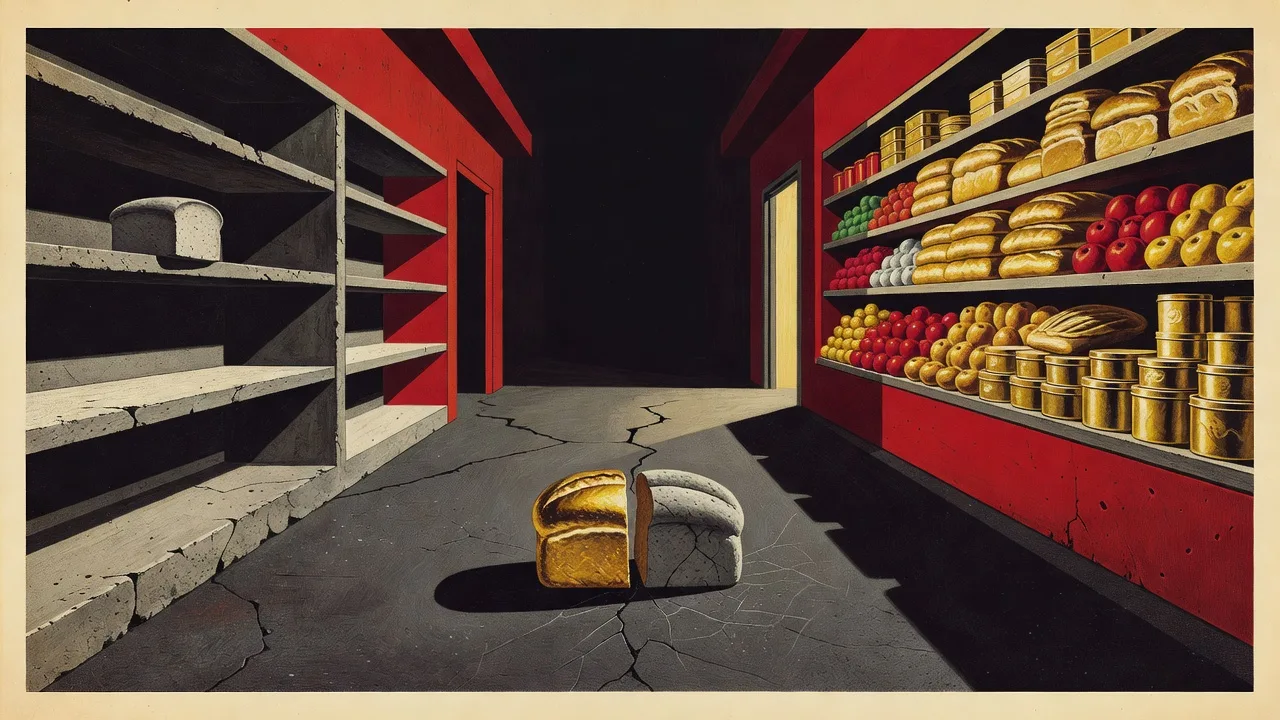
The record of a system that failed this test at full scale; the Berlin experiment, two grocery stores twenty minutes apart, is the exhibit that follows this court’s adjournment: The Berlin Coda.
The first school understood this without needing to name it. Owen’s workers could leave New Lanark. That is why their cooperation was real. And that is why the word, at its root, socius, companion, still means what it meant: an association of equals, joined freely, and free to go.
Series: The Etymological Court · Previous: Libertarianism · Next: Communism