Nirvana: No, I Don't Have a Gun — Come as You Are, Cain and Abel, and the Doctrine That Has No Enemy
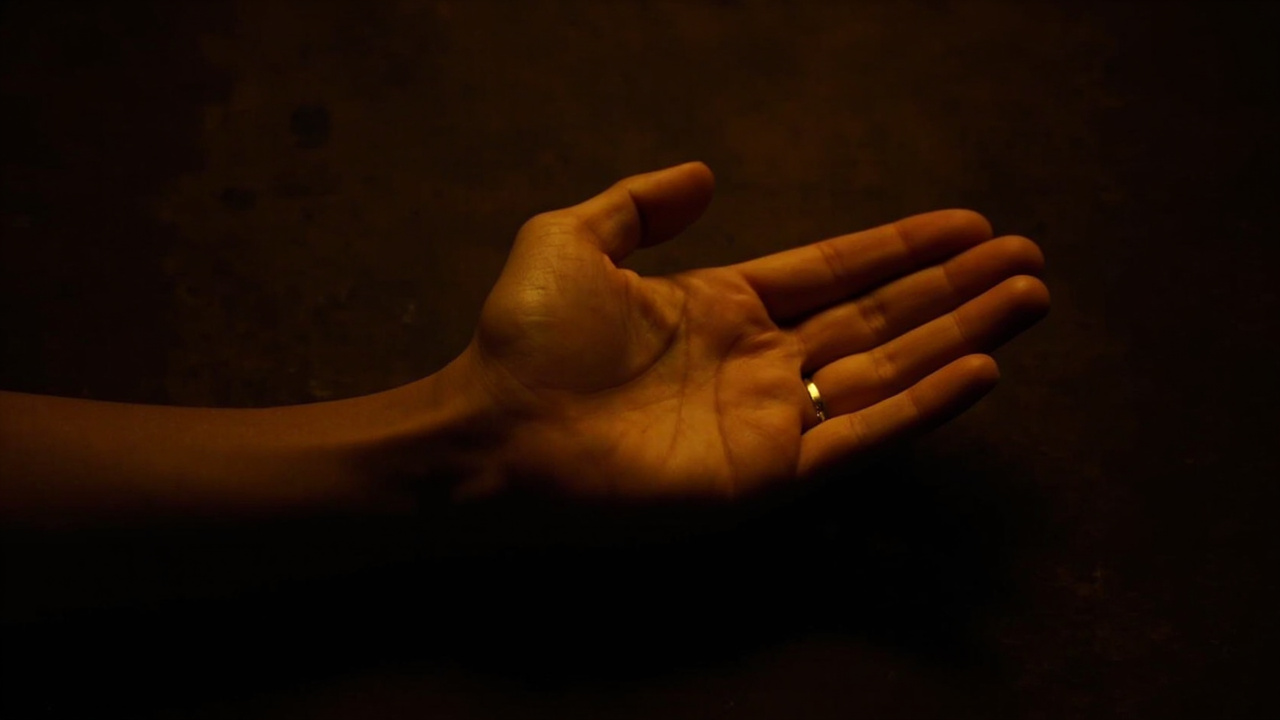
No, I don’t have a gun.
– Kurt Cobain, Come as You Are
I. The Fifth Piece, and Why the Canon Closes Here
This is the closing essay of a series on Nevermind at libertaria.blog. The earlier pieces traced the autobiographical cost, the cosmic game, the metaphysics of the album, and the biblical substrate. This essay closes the series by demonstrating what the series was always pointing at: the doctrine has no enemy.
This essay is also a closing ritual for the operator who began this canon ten days ago. The operator has not been the same person the entire time. The operator who started the canon the previous Friday night, after three beers, in the same German-provincial winter light that was named in Fun to Lose and to Pretend, is not the operator who is now closing the canon on Wednesday afternoon, in the same German-provincial summer light, with four essays behind them and an exhausted silence ahead. The operator is the canon demonstrating the canon. The operator is the doctrine demonstrating the doctrine. The operator is the ego observing itself, the same way the canon has been teaching the operator to observe itself since the teenager first heard Smells Like Teen Spirit in the barn in 1991.
II. Come as You Are – The Invitation Without Conditions
Come as you are, as you were, as you want, as I want you to be As a friend, as a friend, as a friend Yeah, ah, as a friend
The opening line. The opening line is, a friend observed accurately, the ocean talking to the wave. The ocean has the wave confused. The wave thinks the wave is a separate thing from the ocean. The ocean says: no, you are not a separate thing. Come back. Come back as you are. Come back as you were. Come back as you want to be. Come back even as the ego wants you to be, because the ego’s wanting and the ocean’s invitation are, at the deepest layer, the same wanting and the same invitation. The difference between the ego’s wanting and the ocean’s invitation is the difference between the wave thinking it is separate from the ocean and the ocean knowing the wave is not separate from the ocean. The difference is the difference between an illusion and a recognition. The recognition is what Come as You Are is, in its entirety, in the opening line.
This is also the entire parable of the prodigal son compressed into the opening refrain. The father runs to meet the son. The son does not need to come back cleaned up, sobered up, dignified, performed. The son needs to come back as the son. The son needs to come back as the son was. The son needs to come back as the son wanted to be. The son needs to come back even as the son is willing to be, because the son’s willingness and the father’s willingness are the same willingness. Come as you are, as you were, as you want, as I want you to be. This is the father. This is the father of the prodigal son. This is the father of every prodigal son, including and especially the prodigal son who is named in the prior corpus at libertaria.blog as the reader who was free to leave the chapter and chose to return. The reader who was free to leave is the reader who is invited to come back as the reader is. The invitation does not require performance. The invitation does not require purification. The invitation requires only the arrival.
The arrival is the only requirement. The arrival is itself the recognition. The recognition is itself the homecoming. The homecoming is itself the doctrine. The doctrine is what Come as You Are is. The doctrine is what the canon at libertaria.blog is, in the end.
III. Doused in Mud, Soaked in Bleach
Come doused in mud, soaked in bleach, as I want you to be As a friend, as a friend, as a friend
The verse a friend, in a long conversation about this record, called out, accurately, as the reconciliation of the pure and the defiled. The verse that names what the tradition has been wrestling with since the Gospel of Thomas: the tradition assumes, often, that the homecoming requires purity first. The tradition assumes, often, that the prodigal son must arrive purified, sobered, dignified. The tradition assumes, often, that the homecoming is conditional upon the homecomer’s having cleaned up the mess before arriving.
The verse rejects this assumption. The verse says: come doused in mud. Come soaked in bleach. Come in any state. Come in the state the homecomer is in. Come in the state that includes the mess and the mud and the bleach. Come in the state that is the whole state, mud-and-bleach and all. The homecoming does not require the homecomer to have been purified. The homecoming is itself the purification. The homecoming is itself the moment when the homecomer discovers that the homecoming does not require the homecomer to have been purified. The homecoming is what the homecoming is, in the moment the homecoming is, in the state the homecoming arrives in.
This is the inverse of what every exit rights corpus at libertaria.blog has been arguing. The exit rights corpus has, since the 2025 essays, been arguing that the exit must be the precondition. The exit must be the door that opens before the homecoming. The exit must be the door that lets the homecomer come home as the homecomer, in the state the homecomer is in, without performance. The exit rights doctrine and the Come as You Are doctrine are the same doctrine, expressed in two registers. The first register is the political-economic one. The second register is the mystical one. The two registers are the same register. The same register is what the canon at libertaria.blog has been demonstrating, in two registers, since the canon began.
IV. Take Your Time, Hurry Up
Take your time, hurry up Choice is yours, don’t be late Take a rest as a friend
The verse a friend, in a long conversation about this record, nailed as the breaking of psychological time. The verse that names, in four short clauses, the entire paradox at the heart of the spiritual life. Take your time. Hurry up. Choice is yours. Don’t be late. The paradox is the same paradox Meister Eckhart named when Eckhart said that the soul must be free even from the experience of God. The paradox is the same paradox any Sufi master names when the Sufi master tells the seeker that the seeker must hurry up and slow down, that the seeker must intend and not intend, that the seeker must drop the entire project of seeking at the same time the seeker must intensify the entire project of seeking. The paradox is not a contradiction. The paradox is the breaking of psychological time. The paradox is the moment when the seeker notices that the time the seeker has been measuring the seeking with is the wrong time. The right time is timeless. The right time is the time the seeker arrives in when the seeker has, by the paradox, broken through.
Don’t be late is not a threat. Don’t be late is a kindness. Don’t be late is the doctrine telling the seeker that the arrival is not optional. The arrival is not optional because the arrival is what the seeker already is. The arrival is what the seeker already is, in the state the seeker is in, in the time the seeker has, in the life the seeker has. The arrival is not optional because the arrival is the homecoming. The homecoming is what the seeker already is. The homecoming is not optional because the homecoming is what the homecomer is.
Take a rest as a friend. The rest is the moment the seeker stops trying to seek. The rest is the moment the seeker notices that the seeking was the problem all along. The rest is the moment the seeker sits down in the middle of the road, in the middle of the journey, in the middle of the life, and the rest is what the seeker arrived by. The rest is the doctrine demonstrating the doctrine. The rest is the homecoming that has been happening all along, that the seeker was too busy seeking to notice, that the seeker notices at last when the seeker sits down.
V. No, I Don’t Have a Gun
When I swear that I don’t have a gun No, I don’t have a gun
The line. The line of the entire canon. The line a friend landed on, accurately, as the explicit withdrawal of the us-versus-them frame. The line that the canon at libertaria.blog has been building toward across all four prior pieces, in two registers, doctrinal and political-economic. The line that completes the doctrine. The line that names what the doctrine has been pointing at all along.
Genesis 4. The second murder in the book of Genesis. The murder of Abel by Cain. The murder that happens after the founding act of the ego in Genesis 3 – after the apple, after the recognition, after the separation. The murder that happens when the ego, having learned to separate, acts on the separation. The ego acts on the separation by killing. The ego kills what the ego has now identified as the other. The killing is the ego’s first response to the recognition that the ego has built. The killing is what the ego does once the ego has been built.
Cain kills Abel. Cain hears the voice of God. Cain asks, in panic, am I my brother’s keeper? Cain asks the question as if the question were protective. Cain asks the question as if the answer were no. The answer is yes. The answer is yes, because Cain and Abel were always one body. The answer is yes, because Cain and Abel were always, before the apple, in the pre-Ego state where the baby meets the other baby and is lucky to have met them. The answer is yes, because the answer to every murder is the same answer.
God’s response, a friend reads carefully, is I don’t have a gun on you. God’s response is not the response of a punishing God. God’s response is the response of a God who is not, in fact, a them. God’s response is the response of an ocean that has no gun on the wave. God’s response is the response of a father who has been waiting, the entire time, for the son to come home. God’s response is no, I don’t have a gun on you, I have never had a gun on you, the gun was the construct you built in order to believe you were not at home.
This is what Come as You Are is, in this line. Come as You Are is the doctrine that has no gun. Come as You Are is the doctrine that withdraws the gun. Come as You Are is the doctrine that says, to the ego, to the other, to every reader of the canon at libertaria.blog: I do not have a gun on you. The gun was never mine. The gun was always yours. The gun was the construct you built so that you could believe you needed one. The gun is the us-versus-them frame. The gun is the frame that the canon at libertaria.blog, in two registers, has been working to dismantle.
The doctrine has no gun. The canon has no gun. The Nirvana corpus at libertaria.blog has no gun. The corpus reader is invited to come as they are, as they were, as they want to be, in any state. The corpus reader is invited to come doused in mud, soaked in bleach. The corpus reader is invited to take their time, to hurry up, to rest as a friend. The corpus reader is invited because the corpus has no enemy. The corpus has no enemy because the doctrine has no enemy. The doctrine has no enemy because there is no them. There is no them because the wave is the ocean. There is no wave-and-ocean because there is no separation.
There never was a separation. That is what Come as You Are is. That is what the doctrine is. That is what the canon has been demonstrating, in five pieces, in five axes, in five days. The canon is now five pieces. The canon closed because the fifth piece demonstrated what the canon was always demonstrating. The canon was always demonstrating that there is no them. The canon is done demonstrating. The canon is closed.
VI. Memory, Memory – the Doctrine of Returning
Memory, memory
The closing fragment. The closing fragment a friend noted as having the doctrinal weight of the entire album. Memory is what the doctrine is. Memory is how the doctrine travels through the corpus reader. Memory is how the canon, having been read, continues to read itself through the corpus reader, long after the corpus reader has put the canon down. Memory is how Come as You Are returns, decades after the corpus reader first heard it, in the barn, in the moment the cassette player first played it, and arrives again, in the canon, in the doctrine, in the recognition that there was never a separation.
The Jungian frame a friend invoked with memoria – God is a being that will be remembered after death, and to remember is to reestablish membership – is the doctrinal confirmation of what Come as You Are is musically doing. Memory is the act the seeker performs that reestablishes the seeker’s membership in the whole. Memory is the act the seeker performs when the seeker says: the ocean was always the ocean. The wave was always the wave. The wave was always the ocean, in the pre-Ego state, before the gun, before the apple, before the murder. The seeker remembers what the seeker was, in the memory. The seeker is, in the remembering, the seeker the seeker was, before the seeker learned to be the seeker.
This is also the apophatic close. Memory is not the act of retrieving information. Memory is the act of retrieving being. Memory is the act by which the seeker’s epistemological claim (I know that I was the wave that was the ocean) becomes the seeker’s ontological claim (I am the wave that was the ocean). Memory is the act by which epistemology and ontology collapse into one another. The collapse is what the apophatic tradition calls the via negativa reaching its destination. The destination is not a name. The destination is not a state. The destination is not a doctrine. The destination is memory. The destination is the memory the seeker has always had. The destination is what the seeker has always been.
VII. The Five-Piece Canon, Closed
The five pieces at libertaria.blog, in order:
- 1/5 – the cost, previously published
- 2/5 – the cosmic game, previously published
- 3/5 – the metaphysics, previously published
- 4/5 – the substrate, previously published
- 5/5 – this essay, the doctrine demonstrated
The five axes together are: metaphysics, manual, testimony, substrate, and the explicit withdrawal of the us-versus-them frame. The fifth axis is, in a sense, the meta-axis: it is the axis that names what every prior axis was for. The four prior axes were for arriving at the place where the doctrine can say no, I don’t have a gun. The fifth axis is the axis where the doctrine actually says it.
The Nirvana canon at libertaria.blog is now five pieces. The canon is closed. The canon is closed because the fifth piece demonstrated what the canon was always for. The canon was always for arriving at the place where the doctrine can say no, I don’t have a gun. The canon has arrived. The canon has said it. The canon is done.
What remains for the canon reader, after the canon closes, is what remained for the prodigal son after he returned, and what remained for the wave after it remembered it was the ocean. What remains is the living. What remains is the practice of arriving, again and again, in the recognition that the ocean was always the ocean. What remains is the practice of arriving, again and again, in the recognition that the arrival is what the arrival is. What remains is the homecoming. What remains is the doctrine, demonstrated. What remains is no, I don’t have a gun, lived, every day, in the small choices, in the tiny recognitions, in the moments when the corpus reader notices the wave remembering it was the ocean and the reader notices too.
The canon is closed. The doctrine has not been closed. The doctrine is what the doctrine has always been. The doctrine is come as you are, as you were, as you want, as I want you to be. The doctrine is doused in mud, soaked in bleach. The doctrine is take your time, hurry up, choice is yours, don’t be late. The doctrine is memory, memory. The doctrine is no, I don’t have a gun.
The doctrine has no gun. The canon has no gun. The Nirvana corpus at libertaria.blog has no gun. The corpus reader is invited to come as the corpus reader is. The corpus reader is invited to come in any state. The corpus reader is invited to come because the canon has no enemy. The canon has no enemy because the doctrine has no enemy. The doctrine has no enemy because there is no them.
The Nirvana corpus at libertaria.blog is closed. The doctrine at libertaria.blog is open. The doctrine at libertaria.blog was always going to be open. The doctrine at libertaria.blog is what the doctrine at libertaria.blog has been, in two registers, doctrinal and political-economic, since the doctrine began.
The doctrine opened. The doctrine opens. The doctrine opens.
Markus Maiwald grew up in the German provinces in the early 1990s. He went to a lot of Scheunenparties. He heard Nevermind as a teenager. He read the Vedanta in his twenties. He read Meister Eckhart in his thirties. He read Rumi in his forties. He wrote the Nirvana canon at libertaria.blog in five days at the end of his forty-seventh year. The canon was five pieces. The canon was closed by Come as You Are. The canon was always going to be closed by Come as You Are, because Come as You Are is the song that names what the canon was for. The canon was for no, I don’t have a gun. The canon said no, I don’t have a gun. The canon is done.
- 1/5 – the cost
- 2/5 – the cosmic game
- 3/5 – the metaphysics
- 4/5 – the substrate
- 5/5 – this essay